The FCC’s Foreign-Made Consumer Router Ban Is More Than a Security Move, It Is the Opening Act of a Broader Supply-Chain Realignment
Analysts
Ray Mota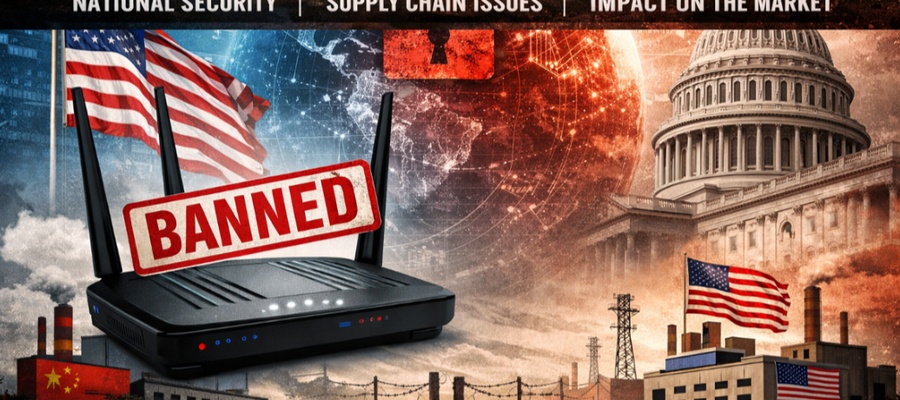
The FCC's ban on foreign-made consumer routers is more than just a security measure; it's the start of a larger realignment of the supply chain.
Adding routers made in another nation to the Covered List on March 23, 2026, by the FCC is not a normal change to the rules. It is a change in policy that stops the FCC from giving fresh approvals for new foreign-made consumer-grade routers. This implies that most new consumer Wi-Fi routers and residential access points will no longer be able to enter the US market unless they have conditional certification. The FCC has also made it clear that previously approved models and devices that have already been bought are not banned from use, sale, or ownership. A limited waiver now lets people update the software and firmware on previously approved routers until at least March 1, 2027.
This isn't just about routers; it's more about setting a precedent for the industry as a whole. The FCC is saying that "country of production" can now be used as a national security factor in consumer networking. That is a far broader standard than the ones that have come up in the past, which were mostly about individual companies like Huawei, ZTE, or more recently TP-Link. Washington is changing its policy from not trusting single vendors to trusting the whole supply chain. That important because consumer routers are the first line of defense for identification, traffic segmentation, and security telemetry. They are in homes, small enterprises, remote offices, and hybrid-work environments.
This move has some significant benefits. First, it makes the market deal with an issue that the industry has known about for a long time but only partially fixed: the home and small-office router is one of the weakest links in the cyber chain. Routers are typically not well patched, are hidden from consumers, and are easy targets for botnets, espionage, lateral movement, and supply-chain manipulation. Policymakers are trying to lower systemic risk at the network edge by making it harder for people to enter the US market and setting stricter rules for those who do. Second, the decision might lead to the creation of a new ecosystem for trusted connection devices in the US or with allies. This is something that has been spoken about for years but never really happened on a consumer level. Third, it might open up a new market for managed home networking, secure CPE lifecycle services, and subscription-based support models that focus on validated firmware, long-term updates, and trusted supply-chain certification.
But the worries are just as big. The first is a disturbance in the economy. Most consumer networking devices are made outside of the US, thus this rule might make it much harder to get models, lower competition, and raise prices until either conditional approvals are given or production in the US and trusted countries grows. Wired and other news sources have already called this a restriction that might take a lot of the brands and models that people like off the US market in the future.
The second worry is that things aren't clear. The FCC has made it clear what happens to new devices that want to get permission, but the market still needs a much clearer migration plan for managing the installed base, channel inventory, replacement cycles, support obligations, warranty handling, ISP-provided CPE, and how to handle products that were already approved but later changed. The FCC's interim waiver on security and firmware updates until March 1, 2027 is essential because it keeps the worst conceivable thing from happening, which is freezing the installed base without fixes. It also shows that the replacement and lifetime model is still not written in stone.
The final worry is strategic spillover. Once policymakers accept the idea that foreign manufacturing alone might be a reason to be on the Covered List, it is easier to apply that idea to other types of goods. The FCC's own explanation links this move to decisions about national security and the larger Covered List structure set up under the Secure and Trusted Communications Networks Act. That makes this look less like a one-time action by a customer and more like a pattern.
I have four main questions:
1. What will other countries do about this?
Other countries probably won't see this as just a way to keep people secure. They will perceive it as a signal about trade, sovereignty, and digital-industrial policy. Allies could break up into three groups. Some will collaborate with the US to establish their own "trusted networking equipment" frameworks. Some people will try not to take sides and instead set up certification systems based on software openness, testing, and disclosure of where the program came from, rather than just where it is located. A third group, especially countries with ambitions to grow domestic tech manufacturing, may retaliate with reciprocal restrictions on US-made or US-controlled digital infrastructure products. This makes the global market more likely to become more fragmented, where networking equipment is approved not only for worldwide interoperability but also for geopolitical acceptability. That would raise costs, lower scale economies, and maybe slow down the cycles of innovation in Wi-Fi, edge security, and residential broadband devices. The FCC documents don't talk about foreign retribution, but the policy is so broad that it's possible that it could happen.
2. It's solely for consumers today. Will it later include businesses and service providers?
This is the most crucial strategic question, and I think the answer is that the chance is no longer low. I wouldn't say that growth is certain, but the policy reasoning is there now. Consumer routers are generally the best place to start politically since they effect a lot of people and businesses, but they don't directly affect the most complicated portions of carrier or enterprise operations. Critics would naturally want to know why enterprise branch routers, campus access points, SD-WAN equipment, and even provider-managed CPE will be treated differently if the FCC and other agencies decide that consumer CPE made outside the US is too risky. Legal logic alone will not stop growth; economic suffering will. It would be much more disruptive to apply this methodology to businesses and service providers because such areas rely on extensive certification processes, multi-year maintenance contracts, and supply chains that are quite international. If expansion does happen, it will probably come in phases. First, it will happen on the consumer and SMB edge, then on chosen business edge use cases, and then on government-facing and critical-infrastructure deployments. It won't happen all at once.
3. What is the plan for replacing the current deployments?
The policy is much clearer right now about how new devices can go into the market than how to replace a lot of already deployed devices. The FCC states that anyone can still buy, sell, and use devices that are currently permitted. It also gave a waiver so that routers that were already approved can keep getting security and software updates until at least March 1, 2027. That means that households don't have to rip and replace things right now. But that doesn't mean it's a good long-term plan. Retailers, internet providers, managed Wi-Fi providers, and customers are all at danger because there isn't a whole replacement framework. Who pays for changes? Will ISPs get help or money from the government? Will stores be able to keep selling stock that is already in the channel? Will there be labels to tell the difference between grandfathered devices and devices that are now illegal? Those unsolved problems are important because a policy that modifies the forward supply without a replacement architecture can lead to the worst of both worlds: insecurity in the installed base and inflation for new trusted hardware due to a lack of supply.
4. Will it merely change and only affect routers in a few countries?
Maybe, but not always. The FCC's decision, as it was announced, is broad: routers made in another nation are included unless they get conditional permission from DoW or DHS. That means that the framework isn't really country-specific right now. By default, it's broad, but there are exceptions that can be made through an approval procedure. That could change over time into something more selective, especially if the US learns it can't build up enough domestic consumer-router manufacturing capacity quickly enough. A trusted-origin or trusted-supply-chain model is the most likely medium-term scenario. In this paradigm, routers from some nations, factories, or audited production chains get conditional clearances, while routers from other countries do not. In other words, the wide ban we have now could turn into the "trusted countries/trusted production" system we have in the future. But for now, the text suggests a broad restriction, not just a restricted exception for one or two countries.
The deeper meaning for the industry
Not only security is the major problem here. It is the reframing of networking as strategic infrastructure that goes all the way to the edge of the home. For a long time, telecom policy saw home routers as consumer electronics. This change makes it more resemble essential infrastructure adjacency. When that way of thinking takes root, the talk goes from "best price and best features" to "trusted origin, lifecycle assurance, and national resilience." That change could help US industrial policy and national security goals, but it could also make the consumer networking industry smaller, more expensive, and slower to grow.
This might be the beginning of an opportunity for service providers. If people can't find trusted gadgets in stores, broadband providers may be able to get more customers by offering certified secure Wi-Fi gateways, managed home networking, mesh updates, and security services as part of the subscription. For vendors, it means a rush to get conditional approvals, set up domestic assembly or manufacture in allied countries, and change their focus from "cheap high-performance Wi-Fi" to "trusted secure connectivity." Even if this isn't aimed at businesses, procurement teams should take this as an early warning and start mapping out their supply-chain vulnerabilities today.
The bottom line
I think this FCC action is important because it changes the US from having specific rules for certain suppliers to a much broader security policy based on where things are made and how trustworthy the supply chain is. The good things are real: more focus on edge security, a possible boost to manufacturing in the US, and a drive for trusted networking standards. But the worries are just as real: costs will go up, there will be fewer choices for consumers, the supply chain will be disrupted, the rules around replacements will be unclear, and this consumer legislation might set a precedent for future limitations on businesses and service providers.
Below is the link to the FCC Document
https://docs.fcc.gov/public/attachments/DOC-420034A1.pdf?utm_source=chatgpt.com
#SupplyChainSecurity #TrustedInfrastructure #DigitalSovereignty
Ray Mota rmota@acgcc.com
You might like similar